
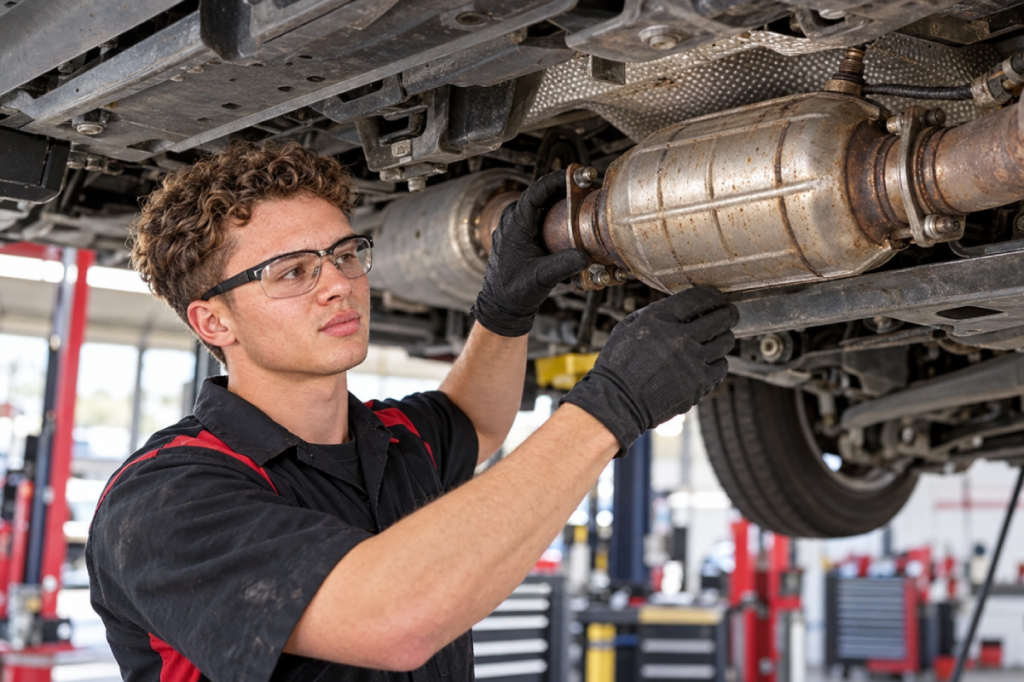
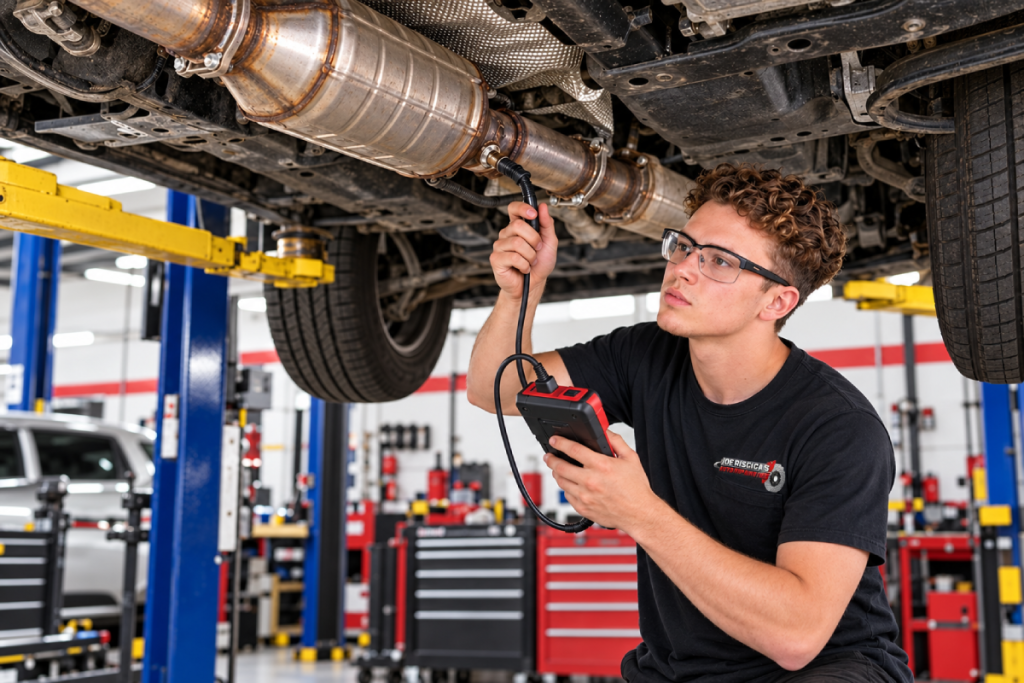
A sluggish engine, a rotten egg smell, or a check engine light can point to catalytic converter trouble.
These symptoms of a bad catalytic converter can also have other causes, so it’s best to confirm the problem before replacing parts.
Here’s what to watch for and when to have your vehicle checked in Deer Park, NY, and nearby Long Island communities across Suffolk County
What Are the Symptoms of Catalytic Converter Failure?
Common signs of a failing or clogged catalytic converter include:
- Sluggish acceleration or loss of power, especially uphill or while towing.
- Reduced fuel economy or engine hesitation.
- A check engine light, sometimes with a P0420 or P0430 code.
- A rotten egg or sulfur smell from the exhaust.
- A metallic rattle from underneath the vehicle.
- Dark exhaust smoke or unusually high heat beneath the vehicle.
- Stalling or trouble starting if the converter is severely restricted.
- An emissions inspection failure.
These symptoms can have other causes, so a warning light, smell, or performance change alone can’t confirm converter failure. Have the vehicle diagnosed before replacing parts.
How a failing converter can affect performance
A catalytic converter helps reduce harmful exhaust emissions. If it becomes restricted, exhaust can’t flow freely, which may make the engine feel weak, especially when you accelerate, climb a hill, or tow. A severe blockage can cause hesitation, stalling, or difficulty starting.
You may also notice worse fuel economy. But these symptoms don’t prove the converter is at fault; problems with ignition, fuel delivery, or other exhaust components can feel similar. An experienced mechanic can check exhaust flow and related systems to find the cause.
What does a check engine light mean?
A catalytic converter problem may turn on the check engine light. On many vehicles, oxygen sensors before and after the converter help the computer monitor emissions system performance. Codes such as P0420 or P0430 can indicate that converter efficiency is below the expected threshold.
Those codes are clues, not a diagnosis. A sensor or wiring issue, an exhaust leak, or an engine problem can also affect the readings.
Have the code checked and the system diagnosed before replacing the converter.
In New York, many vehicles subject to an OBDII emissions inspection have their engine light and onboard emissions results examined. New York DMV dmv.ny.gov
Notice smells, smoke, or a rattle
A strong rotten egg or sulfur smell from the exhaust can be a sign of a converter or engine issue. It isn’t proof by itself: fuel mixture problems and other faults may also cause unusual exhaust odors. If you smell sulfur repeatedly, arrange an inspection.
Dark smoke from the tailpipe is another reason to get the vehicle checked. It can signal an engine running problem that may also damage the converter.
A metallic rattle under the car, particularly at idle or when revving, can come from a loose or broken internal substrate. The noise may also come from another exhaust component, so it needs to be located.
Check for excess heat and inspection trouble
A restricted or damaged converter can become extremely hot. If you notice a burning smell, visible smoke beneath the vehicle, or unusual heat near the floor, pull over somewhere safe and shut the engine off.
Don’t touch the exhaust system; it can cause serious burns. If the vehicle is smoking or the problem feels severe, arrange assistance rather than continuing to drive.
A failing converter may also contribute to an emissions inspection failure. New York’s OBDII inspection checks the vehicle’s onboard emissions system for applicable vehicles, and the emissions monitor includes the catalytic converter. NY DMV
Find the cause before replacing the converter
Converters can be damaged by problems upstream. Misfires from worn spark plugs or faulty ignition coils, or excess fuel from an injector problem, can send unburned fuel into the exhaust and overheat the converter. Oil or coolant entering the combustion chamber can contaminate or coat its internal material.
Replacing the converter without fixing the cause can lead to another failure.
Proper diagnosis should include checking for misfires, fluid leaks, fuel problems, exhaust leaks, and sensor faults. A converter may be damaged or clogged, but a warning light or one symptom alone can’t confirm that.
Visit Joe Riscica’s Auto Repairs in Deer Park, New York
Joe Riscica’s Auto Repairs serves drivers in Deer Park and across Suffolk County. Bring in your vehicle so the cause can be diagnosed and the right repair recommended.
Family-owned and operated since 1982, with 44+ years in business, Joe Riscica’s Auto Repairs has built a lasting reputation for honesty, integrity, professionalism, and dependable customer service.
If your vehicle feels weak, smells unusual, rattles underneath, or has a check engine light, schedule an inspection before the problem gets worse.
Call us at (631) 667-3395 or reach our Facebook page.
Frequently Asked Questions
What are common symptoms of a bad catalytic converter?
Common symptoms include sluggish acceleration, reduced fuel economy, a check engine light, a sulfur smell, an exhaust rattle, dark smoke, or an emissions inspection failure.
Can a bad catalytic converter cause loss of engine power?
Yes. If the converter is restricted, exhaust may not flow freely, which can make the engine feel weak during acceleration, hill climbs, or towing.
Does a P0420 or P0430 code confirm catalytic converter failure?
No. These codes can indicate low converter efficiency, but sensor or wiring faults, exhaust leaks, and engine problems can cause similar readings. Diagnosis is needed to confirm the cause.
Why does my vehicle smell like rotten eggs?
A sulfur smell can point to a converter or engine issue, but it doesn’t confirm the cause by itself. Fuel mixture problems and other faults can also cause unusual exhaust odors.
Can engine problems damage a catalytic converter?
Yes. Misfires, excess fuel, or oil or coolant entering the combustion chamber can damage or contaminate the converter. Repairing the underlying problem can help prevent repeat failure.
What should I do if I notice smoke or excess heat under my vehicle?
Pull over somewhere safe and shut off the engine. Don’t touch the exhaust system, which can cause serious burns. Arrange assistance if the vehicle is smoking or the problem seems severe.


